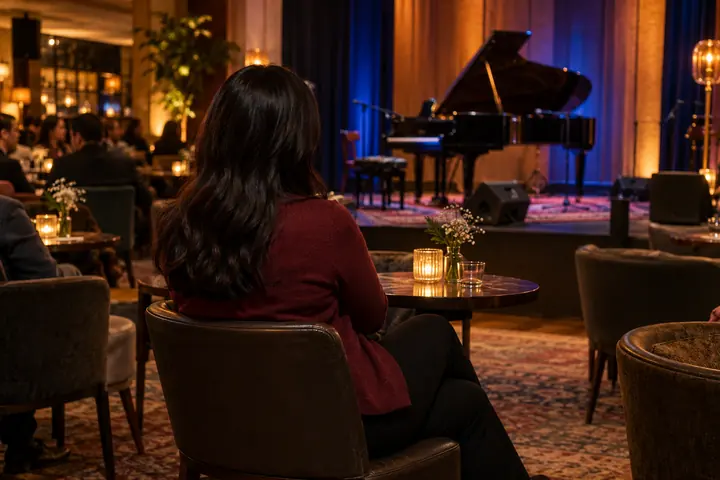
Choose the performance before defining the evening
A Mumbai concert companion request should begin with a real public programme that interests you. Name the performer or event, venue, date and the official source for its current details. Describe what you would enjoy sharing about it rather than assuming every music occasion has the same rhythm. A seated recital, an amplified standing show and a small listening-room set call for different expectations. The programme supplies the anchor; other activities should be added only if they serve the occasion and fit the time you can realistically protect.
You do not need to demonstrate deep musical knowledge to propose company. Perhaps you recognise a few songs, want to hear an unfamiliar instrument or simply enjoy the attention of a live audience. Say that plainly. A companion for live music is being asked to share the listening, not to perform enthusiasm on demand or agree with every opinion. Allow space for different tastes. One person may notice the arrangement while another responds to the atmosphere, and those differences can give a later conversation more substance than assuming you will experience every moment identically.
Verify the event rather than relying on a remembered listing
A public music outing needs current admission information. Check the organiser's or venue's own listing for the date, entry time, performance time, age conditions and any registration requirement. Be alert to the distinction between doors opening and the music beginning. If the event has several sets or artists, identify which part you intend to attend. A social post, an old review or a photograph of the venue cannot confirm the programme or conditions for the date you have in mind.
The website does not maintain a live concert calendar, sell tickets or provide guest-list access. Share the current event link when discussing the outing so the proposal refers to the same performance for both participants. If entry conditions are unclear, resolve them with the organiser before building other arrangements around the event. Some venues require named tickets, identification at the door or separate table reservations. Do not send another person's personal information to a third party without agreement. The companion plan and the admission process are connected practical decisions, but neither one automatically completes the other.
Understand seating, standing and the view of the stage
A Mumbai performance companion should know what participation will physically involve. Tell the operator whether the event is seated, standing or a mixture, and whether seats are assigned. Check the actual ticket category rather than assuming the whole venue offers the same experience. A balcony seat, a table near a speaker and an unreserved standing area can differ considerably in comfort, visibility and movement. If being seated matters, verify that arrangement before buying instead of treating a possible vacant chair as part of the plan.
Where tickets are assigned separately, decide whether adjacent seating is necessary and how it will be arranged. Do not promise a shared table or view that the venue has not confirmed. If step-free access, a particular entrance or a shorter walk is important, ask directly about the route for your ticket category. The access planning page gives useful questions without presenting the site as a specialist support service. Social companionship does not include personal care or mobility assistance. A clear description of the setting lets both participants assess the proposed occasion before accepting it.
Discuss sound and atmosphere without judging preferences
A music companion in Mumbai may enjoy an energetic audience, while you may prefer a quieter, seated performance. Neither preference makes someone a better listener. Explain the environment you are seeking and check whether the event is likely to fit it using the venue's own information. Do not assume that every jazz programme is quiet or every acoustic performance is suitable for uninterrupted conversation. Amplification, room size and audience behaviour can affect the atmosphere independently of the musical label used to advertise the evening.
Sound comfort is a practical consideration, not a detail to postpone until arrival. If you have a specific requirement, describe it in functional terms and verify what the venue can provide. This guide does not assess sound levels or give medical advice. It also cannot promise a quiet space, re-entry or a place to step outside. Ask about those conditions before choosing. A shorter programme or a different type of public performance may be a better fit than asking either participant to endure an environment they already expect to find uncomfortable for the sake of keeping the original idea.
Plan the arrival around an exact public meeting point
A companion for a concert in Mumbai should not have to search an entire queue, foyer or busy street to find the meeting. Choose a precise staffed public point that both people can reach independently, and describe it using the venue's current entrance information. If ticket collection or security checks happen before access to that point, account for them in the plan. Avoid a meeting instruction that requires someone to enter a restricted area without the necessary ticket or follow an unfamiliar person to another location.
Allow an arrival margin appropriate to the event, but do not invent a universal number of minutes for every venue. Check the organiser's instructions and decide when the agreed companionship time begins. If you intend to meet for a café conversation before entry, name that public venue separately and include the transfer in the duration. The time guide helps distinguish the social window from each person's own travel. A settled arrival gives you room to orient yourselves, find your place and begin listening without making the first interaction a rushed exercise in locating each other.
Let listening be enough during the performance
A platonic concert companion is company at the event, not a requirement for continuous conversation. Many performances are most enjoyable when you give them your attention and save longer remarks for an interval or afterwards. Follow the venue's expectations about talking, phones, movement and photography. A companion should be free to listen quietly without having that silence interpreted as disinterest. You can share the experience through attention and small, appropriate exchanges rather than trying to maintain a separate discussion over the music.
At a natural pause, ask what stood out instead of demanding a detailed technical judgement. A melody, change of pace, unfamiliar instrument or surprising choice can be enough to discuss. It is fine if your impressions differ. Live performance company does not mean agreement about the artist or pressure to stay enthusiastic throughout. Respect other audience members' experience as well as each other's preferences. If you want a substantial conversation, include a suitable public pause in the plan rather than relying on a listening venue to function like a quiet café while a performance is underway.
Keep optional dining and drinks clearly separate
A Mumbai music evening may include a restaurant meal, but the meal should be an explicit part of the proposal. Decide whether it happens before or after the performance, check the reservation conditions and allow for the route between venues. A table booking can have its own time limit, minimum spend or cancellation terms. Do not assume that an event ticket includes dinner, that the listening venue has a full menu or that a companion's quoted duration covers a second activity without discussion.
Alcohol is not a requirement for attending music or enjoying conversation. Both people should be able to choose what they order without pressure. Agree who pays for food and drinks before ordering, and keep the spend within the arrangement already accepted. The restaurant dining guide offers more detailed table planning when the meal is the main occasion. If the performance ends later than expected, a planned dinner may need reconsideration. An enjoyable evening does not create an obligation to continue to another venue, extend the time or change the public and platonic scope of the original agreement.
Give the ending as much thought as the start
A Mumbai listening venue can have a flexible running order, an encore or several sets, so distinguish the advertised schedule from the finish you actually agree. Decide whether the companionship covers a particular performance, a fixed time window or another clearly described format. Ask how an overrun would be handled rather than assuming somebody can remain indefinitely. If an extension is possible, its duration and any cost need agreement before the original finish. Nobody is required to stay simply because part of the audience remains.
Each person should have an independent route home appropriate to the expected end. Check current transport options for your own journey and do not make departure depend on sharing a vehicle or receiving a lift. A private after-party, backstage invitation or hotel-room continuation is outside the public companionship described here. If you would like a short public conversation after the music, identify the place and time in advance. A defined ending can make the evening feel easier rather than restrictive, because both participants know how the social occasion concludes without having to negotiate it in a crowded exit.
Read ticket conditions alongside the companionship quote
Concert companion fees should be quoted for a defined event, public meeting point and duration. Ask which expenses are separate, including admission, table charges, food, drinks and any agreed travel-related amount. Ticket categories can change the cost of the proposed evening substantially, so discuss the actual option rather than quoting the cheapest advertised entry without its conditions. The fees page explains how to compare a complete arrangement without mistaking a single service amount for an all-inclusive night out.
Changes need their own clarity. An organiser may postpone a performance, replace an artist or change the venue, while an individual participant may need to reschedule for another reason. Ticket refunds and companionship changes may follow different terms. Before buying dependent non-refundable admission, request the written cancellation arrangements and understand who is responsible for each purchase. No refund processing or booking system is connected to this site. The cancellation guide identifies questions to settle; it does not promise that every changed event automatically results in a refund or an alternative companion booking.
Write a useful music enquiry without extra personal detail
A good first message names the current public performance, its venue, your preferred date and the intended duration. Add the ticket category you are considering, whether seating is assigned and whether a meal or interval conversation belongs in the plan. Mention any practical sound or access preference that affects the setting. This gives a real operator enough context to assess the proposal without requiring a long personal biography. The public event guide is useful if your occasion includes additional guests, host rules or a programme beyond the performance itself.
The illustrated people and venues on the site are fictional. A photograph does not identify an available concert companion, verify a current event or establish admission privileges. Keep identity documents, banking details and private accommodation information out of the enquiry. In the current demo configuration, the form prepares a local draft and does not send or confirm anything. Once genuine contact details are installed, read the reply for the actual meeting point, timing, fees, expenses and terms. A clear agreement leaves the evening focused on its simple purpose: attending a public performance together and enjoying the listening at a pace that works for both people.